Autistic Unmasking Without Burning Out | NeuroDiversion

Autistic Unmasking Without Burning Out

What you'll leave with

By the end of this guide, you'll have a low-risk unmasking plan you can test this week, a recovery routine for post-social fatigue, and clear scripts for boundaries that don't drain you.

Quick Start Guide

  • Choose one safe place where you can unmask with low risk this week.
  • Swap one forced behavior for a neutral alternative that costs less energy.
  • Set a short post-social recovery ritual and run it every time.
  • Write one boundary sentence and use it once.
  • Track what helped for seven days before making more changes.

At a glance

Goal: reduce effort, keep safety

Pace: small weekly tests

Priority: nervous system stability

Metric: less crash after social load

Introduction

Unmasking isn't one dramatic reveal. It's a long series of choices about where you can stop performing and where you still need protection. Many autistic adults learned masking to stay safe at school, work, and in social spaces. That adaptation works short term, but the energy cost can stack up into shutdown or burnout.

This guide focuses on sustainable unmasking. You'll get practical steps you can test without blowing up your routine or your sense of safety.

What Unmasking Means

Masking is social camouflaging: rehearsing, suppressing stims, forcing eye contact, and copying social signals so you blend in. Unmasking means you reduce that performance in places where it's safer to be direct and natural.

Research on autistic camouflaging shows people often mask for acceptance and safety, while paying a mental health cost over time.

"A useful unmasking plan gives you more room to breathe, then protects that room so you can keep it."

This walkthrough from autistic educator Purple Ella is a practical companion for starting unmasking in small, sustainable steps.

Why It Can Feel Risky

The fear is often practical. Some environments still punish autistic communication styles. You may also hit identity whiplash after years of performing, because it takes time to feel what is truly yours versus what was trained.

Energy debt is another factor. If you've been masking hard for years, you might already be close to burnout when you start this process.

Practical Strategies

Map Safety Zones

List safe, cautious, and unsafe spaces. Plan unmasking moves only in safe or cautious zones.

Pick One Change

Choose one behavior to stop forcing, then test it for one week.

Recover On Purpose

Use a repeatable decompression routine after high social effort.

Use Clear Scripts

Try short lines like "I need a minute to think" and "Direct questions work best for me."

If sensory overload is part of your crash pattern, reduce environmental load first. That alone can lower how much masking effort you need to spend.

Related ND reads

Autistic Burnout Recovery and Interoception Exercises pair well with this work.

What Not to Do

Don't force big changes all at once. Large jumps can spike anxiety and make you retreat from the whole process. Don't unmask in places that are clearly unsafe just to prove a point.

Skip the perfection test. You can still use scripts and boundaries while being real.

When Support Helps

A neuro-affirming therapist can help with social trauma, boundary scripts, and burnout prevention. Peer support can also make unmasking feel less isolating, especially when your local environment isn't yet supportive.

Long-Term Management

Sustainable unmasking is about choice. You may still mask in high-risk settings, but you gain more control over when and how you do it. Keep tracking early warning signs like sleep disruption, irritability, and sensory spikes.

Build a week that costs less energy, then defend your recovery windows like they are meetings you can't miss.

Conclusion

Start small, stay strategic, and protect your nervous system while you unmask. Steady changes beat heroic effort every time.

Neurodiversion

Need More Gentle Support?

Browse practical, neuro-affirming resources built for real daily life.

Go to Home

Last Updated

February 27, 2026

Disclaimer

This article is for informational purposes only and is not medical advice.

References

  1. Hull L, Petrides KV, Allison C, et al. "Putting on My Best Normal": social camouflaging in adults with autism spectrum conditions. Journal of Autism and Developmental Disorders. 2017;47(8):2519-2534.
  2. Cook J, Hull L, Crane L, Mandy W. Camouflaging in autism: A systematic review. Clinical Psychology Review. 2021;89:102080.
Questions & Adventure

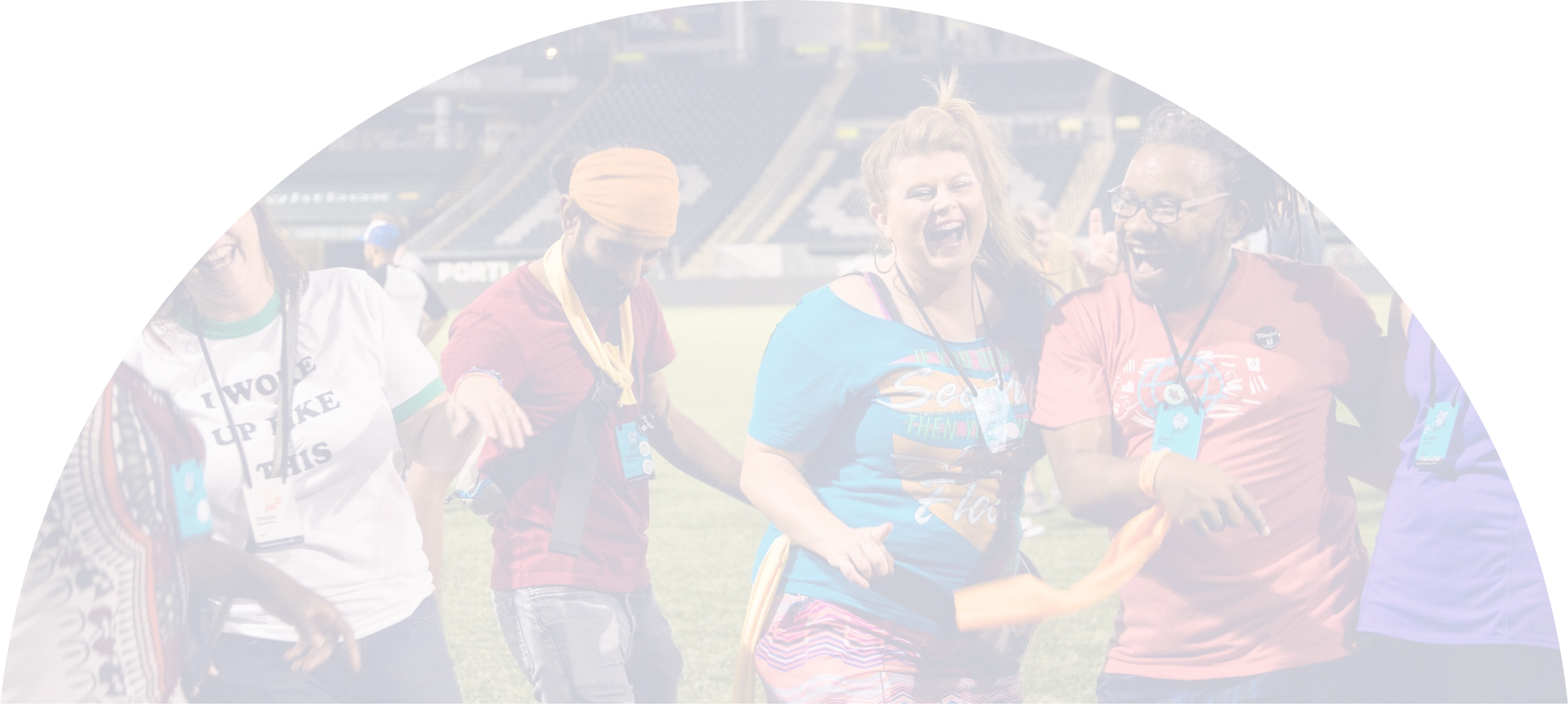
After two successful events, we're confident there's nothing else quite like NeuroDiversion. Other events focus on clinical education or academic research—we're built around community, lived experience, and the joy of being around people who just get it.

We'll be using multiple venues in Austin for ND27, including Fair Market—a beautiful event space in East Austin close to many restaurants and hotels. It's 15 minutes from the airport and you won't need a car unless you choose to stay farther away.

Not just before, but also during and after! At least a few weeks before the event, you'll have access to an app that allows you to browse attendee interests and make initial connections.

Once the big week arrives, programming details will be added, so you can choose which activities to attend and easily make new friends.

(We think you'll like the app, but if you prefer to opt out of being listed in it, you can do that too.)

ND27 ticket pricing will be announced later this year. Join the waitlist to be notified when registration opens.

NeuroDiversion is hosted by Chris Guillebeau, bestselling author and founder of the World Domination Summit, an annual event in Portland, Oregon that brought together thousands of people for a decade.

The planning team has years of experience producing WDS and other events.

Almost everyone on the planning team has personal experience with ADHD, ASD, or another neurodivergent type—we didn't come to this idea out of academic interest.

That means we design the event differently. Sensory sensitivities are taken seriously. You'll find quiet spaces, clear signage, and a flexible schedule that lets you step away whenever you need to. Talks are short. Breaks are real. Nothing is mandatory.

This is a gathering of people who understand social challenges firsthand—you can be as passive or active as feels right to you.

Think of our schedule as a flexible framework. Each day has anchor points (two sessions where everyone comes together) that provide rhythm, but what happens between those points is up to you.

Want to attend every scheduled breakout or workshop? Great! Need to skip something for alone time or an impromptu conversation? Also great! We'll use a simple app to help you track what's happening when, but you're never locked into anything.

We design every NeuroDiversion event with overwhelm in mind. You'll find quiet spaces throughout the venue where you can decompress whenever needed. The schedule includes natural breaks between sessions, but you're always free to step away for extra time if you need it.

No explanation necessary—we get it. We'll clearly mark the quieter areas of the venue so you can easily find a spot to reset.

For ND27, we'll be working with hotel partners close to the main venue. We'll share discount booking codes with attendees at least three months in advance of the event.

Older kids and teens, definitely! And not just attend—they can also participate. There will likely be a few sessions that are appropriate only for adults, but the great majority of programming will be family-friendly.


Absolutely—and you won't be alone in feeling this way. We're creating multiple paths for connection that don't require traditional networking. You might enjoy joining a meetup where the focus is on doing rather than talking, or you might prefer to observe from the sidelines.

This is a gathering of people who understand social challenges firsthand, so you can be as passive or active as feels right to you.

You can do that if that's all you can get away for, but there's only one ticket option. You'll enjoy the experience much more if you stay for the whole three days, like most attendees.

Yes! We offer a package of continuing education (CE) credits for clinicians in attendance. Details and pricing for ND27 will be announced with registration.

Possibly! Many employers support personal development opportunities like NeuroDiversion, and some of our attendees have already had success getting their costs covered.

Your company and organization may already have a process for this, but in case it's helpful, we've made an employer letter template you can use to support the request. Be sure to copy the template into a new document so you can customize it with your details before submitting. :)


Maybe! But first, note that we're doing everything possible to keep costs low while putting together an exceptional experience. Most of our team are volunteering their time and labor, including our founder and all speakers, and we rely on ticket sales to fund the experience.

That said, we do want to provide a few scholarships to help those who wouldn't otherwise be able to attend. Fill out this form if that might be you.

We'll open applications for ND27 community programming later this year. Join the waitlist and we'll let you know when submissions open.

How rude of us! But we'll fix that: send us an email at team@neurodiversion.org

Sound Interesting?

Join the list to be the first to hear about ticket sales!

© 2025-2026 All rights reserved.