Dyspraxia In Adults: Coordination, Planning, And Fatigue | NeuroDiversion

Dyspraxia In Adults: Coordination, Planning, And Fatigue

Myth Vs Reality

Myth: dyspraxia is a childhood issue you outgrow. Reality: for many adults, coordination and motor-planning load still affects work speed, home routines, and end-of-day fatigue.

At A Glance

Core issue: sequencing and movement planning cost more cognitive energy.

Common impact: daily tasks take longer and feel harder to recover from.

Fast win: externalize steps instead of relying on working memory.

Long game: environment design and pacing matter as much as skill drills.

Introduction

A lot of adults with dyspraxia describe the same private mismatch: you're capable, thoughtful, and problem-solving all day, then a "basic" practical task knocks your system sideways. Spills, dropped steps, slow setup, and extra recovery can pile up fast.

If you've also related to executive dysfunction or inertia patterns , dyspraxia can be one reason tasks that involve movement and sequencing feel especially expensive.

What Dyspraxia Is

Dyspraxia is commonly discussed in clinical language as developmental coordination disorder (DCD). In adults, it can affect motor coordination, timing, and step sequencing across home, work, and social contexts.

This short awareness video helps here because it clearly shows how dyspraxia can look in daily life and in formal assessments.

How It Shows Up In Adults

Adult dyspraxia often looks like hidden overhead. You can complete the task, but it takes more setup, more active monitoring, and more recovery than people around you notice. That includes practical routines like cooking, commuting, writing by hand, and shifting between movement-heavy steps.

Step Timeline: Where Friction Usually Appears

  1. Before task: planning order and setup takes longer than expected.
  2. During task: interruptions break sequence and raise error risk quickly.
  3. After task: fatigue and cleanup load reduce capacity for the next activity.

Strategies That Help

Practical support usually works best when it's function-first. Focus on the specific routines that keep breaking down, then redesign one variable at a time: sequence, tool, layout, timing, or cue.

Callout: A Reliable Daily Setup Loop

Use a short pre-task checklist, run one active task lane, and schedule a two-minute reset before you switch contexts. This lowers sequencing drop-offs and prevents the late-day crash that can follow coordination-heavy blocks.

This Dyspraxia Awareness Week talk speaks directly to adult lived experience and practical adaptation.

Professional Support

Assessment is worth considering when coordination and sequencing issues are persistent across contexts, when practical mistakes stay high despite strong effort, or when you need documentation for workplace or school accommodations.

Occupational therapy, neuropsychology, and referral-informed primary care can help map specific barriers to realistic supports. The goal is usable function in your actual routines, not abstract performance targets.

Conclusion

Dyspraxia doesn't cancel capability. It does change how much load movement, sequencing, and transitions place on your day. Start with one high-friction task, adjust the environment, and build supports that save energy for what actually matters.

NeuroDiversion

Read More Practical ND Guides

Explore practical articles on regulation, executive function, and daily systems that reduce friction.

Go To NeuroDiversion Home

References

  1. Tal-Saban M, Ornoy A, Parush S. Young adults with developmental coordination disorder: a longitudinal study. American Journal of Occupational Therapy. 2014;68(3):307-316. doi:10.5014/ajot.2014.009563
  2. Engel-Yeger B. The role of poor motor coordination in predicting adults' health related quality of life. Research in Developmental Disabilities. 2020;103:103686. doi:10.1016/j.ridd.2020.103686
  3. Cavalcante-Neto JL, Bourke M, Silva JMC, Cairney J. Emotional outcomes are poorer in adults with developmental coordination disorder: A systematic review and meta-analyses. Journal of Psychosomatic Research. 2026;202:112537. doi:10.1016/j.jpsychores.2026.112537

This article is for educational purposes only and is not medical advice, diagnosis, or treatment. If you are concerned about dyspraxia, developmental coordination disorder, or any related health issue, consult a qualified licensed clinician.

Last updated: March 26, 2026
Questions & Adventure

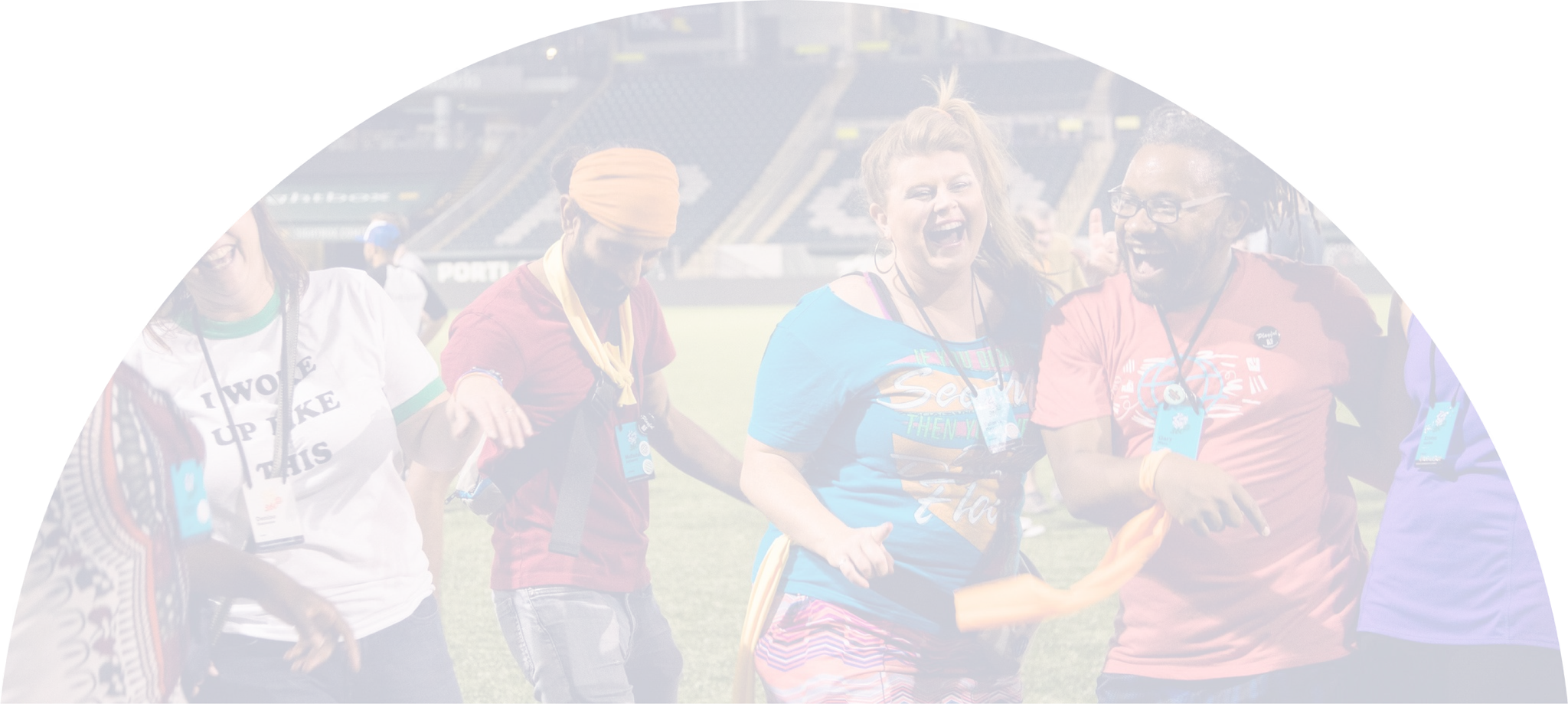
After two successful events, we're confident there's nothing else quite like NeuroDiversion. Other events focus on clinical education or academic research—we're built around community, lived experience, and the joy of being around people who just get it.

We'll be using multiple venues in Austin for ND27, including Fair Market—a beautiful event space in East Austin close to many restaurants and hotels. It's 15 minutes from the airport and you won't need a car unless you choose to stay farther away.

Not just before, but also during and after! At least a few weeks before the event, you'll have access to an app that allows you to browse attendee interests and make initial connections.

Once the big week arrives, programming details will be added, so you can choose which activities to attend and easily make new friends.

(We think you'll like the app, but if you prefer to opt out of being listed in it, you can do that too.)

ND27 ticket pricing will be announced later this year. Join the waitlist to be notified when registration opens.

NeuroDiversion is hosted by Chris Guillebeau, bestselling author and founder of the World Domination Summit, an annual event in Portland, Oregon that brought together thousands of people for a decade.

The planning team has years of experience producing WDS and other events.

Almost everyone on the planning team has personal experience with ADHD, ASD, or another neurodivergent type—we didn't come to this idea out of academic interest.

That means we design the event differently. Sensory sensitivities are taken seriously. You'll find quiet spaces, clear signage, and a flexible schedule that lets you step away whenever you need to. Talks are short. Breaks are real. Nothing is mandatory.

This is a gathering of people who understand social challenges firsthand—you can be as passive or active as feels right to you.

Think of our schedule as a flexible framework. Each day has anchor points (two sessions where everyone comes together) that provide rhythm, but what happens between those points is up to you.

Want to attend every scheduled breakout or workshop? Great! Need to skip something for alone time or an impromptu conversation? Also great! We'll use a simple app to help you track what's happening when, but you're never locked into anything.

We design every NeuroDiversion event with overwhelm in mind. You'll find quiet spaces throughout the venue where you can decompress whenever needed. The schedule includes natural breaks between sessions, but you're always free to step away for extra time if you need it.

No explanation necessary—we get it. We'll clearly mark the quieter areas of the venue so you can easily find a spot to reset.

For ND27, we'll be working with hotel partners close to the main venue. We'll share discount booking codes with attendees at least three months in advance of the event.

Older kids and teens, definitely! And not just attend—they can also participate. There will likely be a few sessions that are appropriate only for adults, but the great majority of programming will be family-friendly.


Absolutely—and you won't be alone in feeling this way. We're creating multiple paths for connection that don't require traditional networking. You might enjoy joining a meetup where the focus is on doing rather than talking, or you might prefer to observe from the sidelines.

This is a gathering of people who understand social challenges firsthand, so you can be as passive or active as feels right to you.

You can do that if that's all you can get away for, but there's only one ticket option. You'll enjoy the experience much more if you stay for the whole three days, like most attendees.

Yes! We offer a package of continuing education (CE) credits for clinicians in attendance. Details and pricing for ND27 will be announced with registration.

Possibly! Many employers support personal development opportunities like NeuroDiversion, and some of our attendees have already had success getting their costs covered.

Your company and organization may already have a process for this, but in case it's helpful, we've made an employer letter template you can use to support the request. Be sure to copy the template into a new document so you can customize it with your details before submitting. :)


Maybe! But first, note that we're doing everything possible to keep costs low while putting together an exceptional experience. Most of our team are volunteering their time and labor, including our founder and all speakers, and we rely on ticket sales to fund the experience.

That said, we do want to provide a few scholarships to help those who wouldn't otherwise be able to attend. Fill out this form if that might be you.

We'll open applications for ND27 community programming later this year. Join the waitlist and we'll let you know when submissions open.

How rude of us! But we'll fix that: send us an email at team@neurodiversion.org

Sound Interesting?

Join the list to be the first to hear about ticket sales!

© 2025-2026 All rights reserved.